
The Rolling Pin

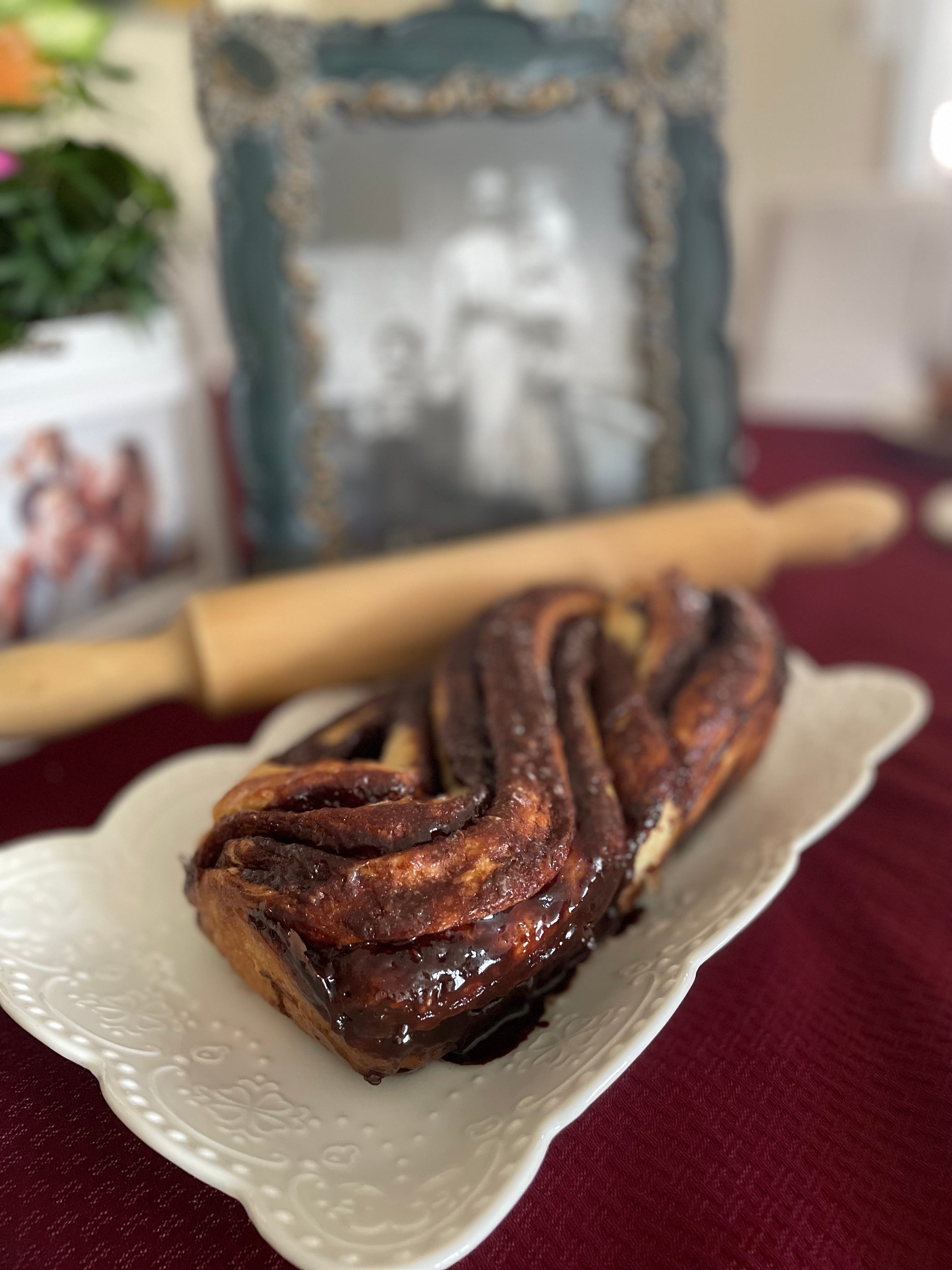
Before she came to Canada, my Slovak Grandma loved to bake babka. The rolling pin she used was a family heirloom. It was chipped in spots and the handle was loose. But this rolling pin had magically rolled out her Slovak matka’s yeasted babka dough throughout her childhood, and her mother’s before her. Grandma’s hands pushed the dough into a flat rectangle. The filling would be poppy seed, as was tradition. Grandma had soaked the ground up seeds in a bowl of sugary milk and left it to sit in the small, humming refrigerator overnight to thicken. Her baby birds, her mladata vtakov —my 3-year-old mother and 4-year-old aunt— loved this filling, more than apple or sugared walnut. Poppy seeds were plentiful here in the Eastern European village of Pivnice, just a few years after World War II. Grandma poked her handkerchief-tied head into the fridge to take out the thick filling and let it sit in the warm kitchen for a minute before she slathered a thick layer onto her babka dough and let it rise.
Her friend Julka Shustman, who worked at the Shustman Family bakery on the main street, made the most moist and sweet poppy seed babka in the village. When Grandma toiled in the fields behind her little stone house, pulling up the stubborn garden weeds in the hot sun with Grandpa, sweating and too tired to bake, she would head to the bakery and grab some of Julka’s pastries for a few dinars to take home to her mladata vtakov.
But Grandma had questions for Julka Shustman that burned in her mind. The whole village suffered under Nazi occupation during the War, and her own family lived in fear during those times. But, what happened to Julka stabbed at her heart. Thinking about her childhood friend had once made her smile, but now, the tears tumbled down her cheeks. They had played together as children. Learned to bake babka together with tiny hands. Walked together in the fields in summer time, elbows crooked, catching butterflies and frogs near the Danube River and picking wild chamomile to make crowns for each other. And then, the teen years came and they drifted apart.
The War pounced on their quiet village, and brought with it such darkness. The village Synagogue burned to the ground. Jewish villagers like the Shustman family were sent to Dachau. Bodies of resistance fighters floated down the Danube.
Grandma had soaked her pillow with nightmares about her childhood friend, nightmares that had haunted her for countless nights. She could see Julka in her dreams, stumbling in the darkness, her thin, ghostly face twisting into a scream. Shadows danced around her as she was being shoved into a cattle car bound for the concentration camp, calling for Grandma to help her. She felt like she was there in the darkness with Julka. A darkness that didn’t care about childhood. That didn’t care about chamomile crowns and girlish laughter, or baking babka, or the bond of best friends.
She had tried to talk to Julka the few times she saw her at the bakery. Maybe these nightmares would stop if she confided to her friend about them. She wanted Julka to know she was there for her, ready to become close friends again. Perhaps they could help each other heal from this darkness together. And every time, Grandma froze.
The next weekend, Grandma’s face fell when the family rolling pin suddenly cracked and fell apart in the middle of rolling out the dough for another sweet poppy seed babka. Was this a sign from above? Grandma abandoned the sticky dough and headed for Julka’s bakery.
She opened the door of the storefront, and the hanging bell skipped across the glass, signalling her presence. Grandma took a deep breath. The smell of vanilla and sugar welcomed her. Her heart started to pound as she caught a glimpse of her friend behind the counter. Could she finally get the nerve to speak to her? Would she make Julka cry? When Julka was dragged out of her family home as a teenager along with the other Jews in the village and forced to board the cattle cars for the camp at Dachau in 1942, did she think she was going to die there? How did she ever survive that?
Grandma had heard the whole story, of Julka’s boyfriend, who, once he had found out that Julka was taken to Dachau in the night, travelled there and had somehow talked the officials into releasing her into his custody. The Jewish teenager miraculously left the camp of death behind and married him, continuing on with her life in Pivnice.
“Julka, ako si? Mate nejake makove babky?” Grandma asked. How are you? Do you have any poppy seed babka? She wanted to ask her more questions. She was about to open her mouth to speak again.
Julka put her hand up, a tattooed row of dark greenish blue numbers exposed on her forearm. “Zuska, we have some, they are so fresh, your girls will love them!” she smiled. Her eyes held a friendly sadness. Silence filled the room as Julka passed the babka to Grandma and stared intently at her, waiting for her to speak again.
Grandma looked down and froze. “My rolling pin broke,” tears streaming down her face
.
Such a heartwarming story! Loved the Slovakian you’ve included and (after your translation) manage to figure it out, it’s similar to Bulgarian. And the rolling pin is such an integral part of every Slav household, my own included 😊
Heartbreaking and deep as a mountain lake. Just beautiful .